
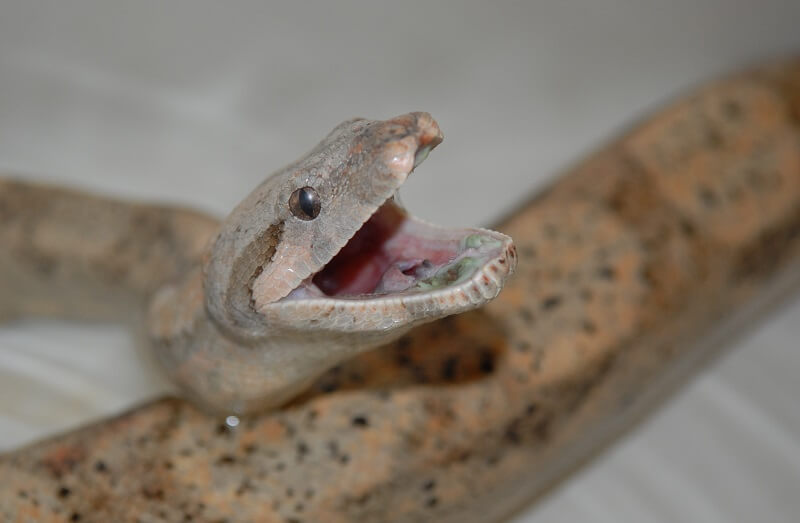
Mouth rot, also known as infectious stomatitis, is one of the most common and dangerous health issues seen in pet snakes. It often starts small — a bit of redness or drooling — but can quickly turn into a severe, painful infection that spreads to the jaw, gums, and even the bloodstream.
If untreated, mouth rot can become fatal, so early detection is crucial.
This guide explains the top signs of mouth rot in snakes, what causes it, and what you need to do immediately to keep your snake safe.
What Is Mouth Rot in Snakes?
Mouth rot is a bacterial infection of the mouth and gums. It usually develops when a snake is stressed or immunocompromised, allowing bacteria to invade damaged or irritated mouth tissue.
Without prompt treatment, the infection can progress to:
- jaw abscesses
- severe swelling
- tissue death
- systemic infection (sepsis)
A vet visit is ALWAYS required to cure mouth rot — you cannot fix it with home remedies alone.
Top Signs of Mouth Rot in Snakes
Below are the most reliable, visible signs you may notice.
1. Red, Swollen, or Inflamed Gums
Healthy snake gums are pale pink and smooth.
Signs of early infection include:
- bright red gum margins
- swelling
- irritation
- snake pulling away when you try to check its mouth
This is often the first warning sign.
2. Excessive Drooling or Stringy Saliva
If you see:
- drool around the mouth
- bubbles
- stringy saliva
…it may indicate infection or inflammation inside the oral cavity.
Snakes do not normally salivate visibly — so this is a red flag.
3. Yellow or White Cheese-Like Deposits
These spots are pus. They may appear as:
- yellow patches
- white build-up
- soft cheesy debris
- stuck material around the teeth
This means the infection is already progressing.
4. Bleeding or Ulcers in the Mouth
Ulcers look like open sores or raw patches.
You may see:
- small red wounds
- bleeding along the gums
- irritated mouth lining
This is painful and needs urgent care.
5. Swollen or Misshapen Jaw (Facial Swelling)
When infection spreads deeper into tissues, you may notice:
- swelling of the lower jaw
- puffiness along the mouth line
- asymmetry in the face
- difficulty closing the mouth
This is often advanced mouth rot.
6. Loss of Appetite or Refusal to Eat
Mouth pain = feeding refusal.
Common behaviors include:
- ignoring prey
- striking but not swallowing
- spitting food out
- losing weight
If your snake suddenly stops eating, always check the mouth.
7. Rubbing Mouth Against Objects
Your snake may rub its face on:
- hide walls
- décor
- glass
- substrate
This is often an attempt to relieve irritation or remove painful debris.
8. Mouth Held Slightly Open
A snake with mouth rot may:
- gape
- keep the mouth cracked open
- breathe differently
This happens when swelling or pus makes it difficult to fully close the jaw.
9. Bad Odor from the Mouth
A foul smell indicates:
- decaying tissue
- severe infection
- trapped pus
If you smell rot when checking your snake — that is a veterinary emergency.
10. Behavioral Changes
A normally calm snake may become:
- irritable
- defensive
- unusually lethargic
- less active
- hiding more
Pain changes behavior fast.
Common Causes of Mouth Rot in Snakes
Mouth rot usually develops due to stress or poor husbandry, including:
1. Low enclosure temps
Weakens immune system.
2. High humidity or wet/dirty substrate
Promotes bacterial growth.
3. Mouth injuries
From:
- aggressive feeding
- live prey bites
- rough surfaces
- stuck shed
- rubbing against glass
4. Vitamin deficiency
Especially vitamin A.
5. Chronic stress
Caused by:
- handling too often
- frequent tank disruptions
- inappropriate enclosure size
6. Dirty water bowls
Bacteria easily spread through drinking water.
Immediate Steps to Take If You Suspect Mouth Rot
1. Schedule a reptile vet appointment ASAP
Only a vet can provide:
- antibiotics
- debridement
- pain relief
- culture testing if needed
Do not delay — mouth rot worsens quickly.
2. Keep enclosure clean and dry
Replace substrate with:
- paper towels
- butcher paper
- reptile-safe liners
Easy to monitor and sanitize.
3. Raise temps to optimal range
Boosts immune function.
Check species-specific requirements:
- Ball python: 88–92°F hotspot
- Corn snake: 85–88°F hotspot
- Boa: 88–92°F hotspot
4. Avoid handling
Handling adds stress and worsens the infection.
5. Assist hydration
Dehydration makes mouth rot worse.
Offer clean, fresh water daily.
What NOT to Do
Avoid the following dangerous mistakes:
- Do not use hydrogen peroxide inside the mouth (damages tissue).
- Do not force-feed — risk of aspiration.
- Do not try to scrape off pus yourself.
- Do not rely on home remedies alone.
These can seriously harm your snake.
Treatment: What Your Vet Will Do
A reptile vet typically performs:
- physical exam
- oral cleaning/debridement
- antibiotic injections or oral antibiotics
- pain relief
- culture and sensitivity tests for severe cases
- inspection for underlying illness
Recovery time ranges 2–8 weeks depending on severity.
Prevention Tips (How to Avoid Mouth Rot Long-Term)
✔ Maintain correct temps & humidity
✔ Keep enclosure clean and disinfected
✔ Avoid sharp décor
✔ Use tongs for feeding
✔ Never feed live rodents without supervision
✔ Provide fresh drinking water daily
✔ Reduce stress from handling or loud environments
✔ Do regular oral checks, especially after missed meals
FAQ
1. Can mouth rot go away on its own?
No. Without treatment, it almost always gets worse.
2. How fast does mouth rot develop?
It can go from mild redness to severe infection in days.
3. Can I treat mouth rot at home?
You can support healing, but you cannot cure it without antibiotics.
4. Is mouth rot contagious to other reptiles?
Not directly, but contagious bacteria in shared tools or water bowls can spread infection between animals.
5. What happens if mouth rot is untreated?
- jaw necrosis
- tooth loss
- bloodstream infection
- death
Early treatment prevents this.