
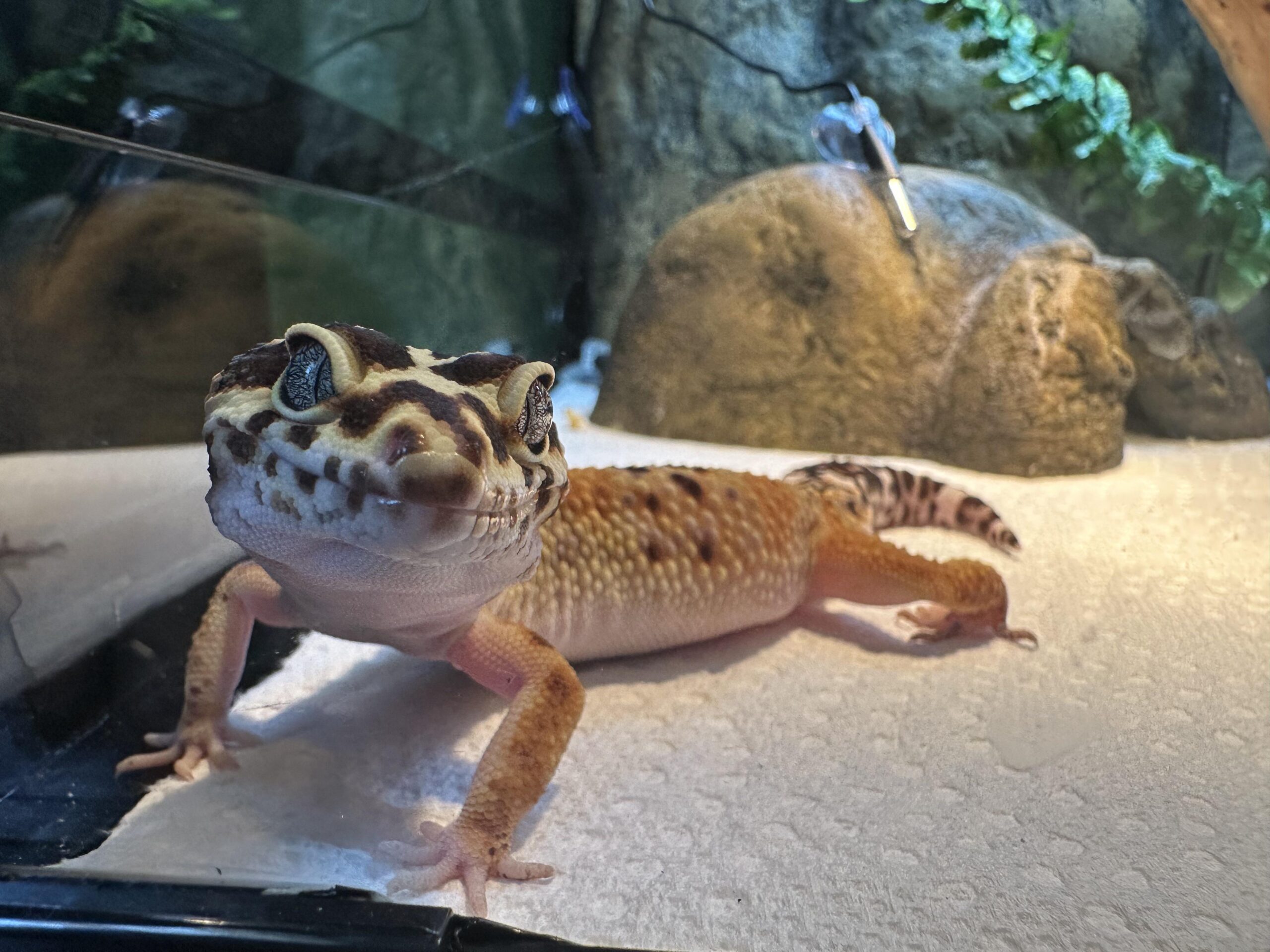
If your leopard gecko suddenly stops eating worms, don’t panic—this is one of the most common feeding issues owners face.
Whether your gecko refuses mealworms, superworms, waxworms, or hornworms, the cause usually comes down to husbandry, stress, or health problems.
This guide explains all 12 reasons, how to troubleshoot quickly, and when to call a reptile vet.
Is It Normal for a Leopard Gecko to Stop Eating Worms?
Yes—sometimes.
Many leopard geckos go through natural appetite dips due to:
- shedding
- cooler temperatures
- minor stress
- switching feeders
But if your gecko refuses worms for more than 7–10 days, you need to investigate.
12 Reasons Your Leopard Gecko Won’t Eat Worms
1. Boredom With Worms (Most Common)
Mealworms and superworms offer poor smell/movement. Many geckos simply get bored and want something that moves more.
Fix:
Try:
- dubia roaches
- crickets
- black soldier fly larvae
- silkworms
2. Worms Not Moving Enough
Leopard geckos are triggered by movement.
Mealworms barely wiggle, and superworms burrow.
Fix:
- Use a shallow smooth dish
- Use tongs to wiggle the worm
- Chill worms briefly to slow escape
3. Wrong Tank Temperatures
Cold geckos cannot digest and will stop eating.
Ideal temperatures:
- Warm hide: 88–92°F (31–33°C)
- Cool side: 75–80°F
- Night: above 70°F
If the warm hide drops below 85°F → appetite crashes.
4. Shedding Cycle
Geckos often stop eating 1–3 days before shedding.
Look for:
- dull skin
- cloudy eyes
- white “glossy” skin
Fix: wait 24–48 hours after shedding.
5. Parasites or Worm Load
Internal parasites cause appetite loss, especially in rescues or pet-store geckos.
Signs:
- runny poop
- weight loss
- lethargy
- smelly feces
Fix:
Fecal test + antiparasitic medication (vet).
External reference:
- https://arav.org (Association of Reptile Veterinarians)
6. Stress From Handling or Changes
Geckos often stop eating worms after:
- moving to a new enclosure
- new décor
- loud environment
- handling stress
- new tank mates
Fix:
Let the gecko settle 48–72 hours.
7. Overfeeding Fatty Worms (Waxworms/Hornworms)
If the gecko recently binged on high-fat worms, it may refuse anything else.
Fix:
Offer only staple feeders (roaches, crickets) for 5–7 days.
8. Illness or Infection
If refusing worms comes with:
- weight loss
- drooping tail
- sunken eyes
- mucus
- labored breathing
…it may indicate infection.
Fix: vet examination.
External reference:
9. Impaction (Constipation)
Mealworms and superworms have tough exoskeletons.
Combined with loose substrate, this can cause impaction.
Symptoms:
- no poop
- swollen belly
- straining
- dragging back legs
Fix:
- warm soaks
- belly massage
- switch to tile/paper substrate
- vet if more than 48 hours
10. Juvenile Appetite Fluctuations
Young geckos can eat a lot one week and almost nothing the next.
Fix: monitor weight; offer smaller feeders.
11. Female Ovulation or Breeding Season
Females often refuse food while forming follicles.
Signs:
- pink “pearls” visible through belly
- restlessness
- tail lifting
Fix: reduce handling, offer softer feeders.
12. Worms Are Too Big
Rule:
Feeder should never exceed the space between the gecko’s eyes.
Oversized worms = refusal.
Fix: offer smaller worms or alternative feeders.
Fast Fix Checklist (What to Do Now)
1. Check Warm Hide Temperature
Should be 88–92°F.
Fix heat first—this solves 40% of feeding problems.
2. Try a Different Feeder
Offer:
- dubia roaches
- crickets
- silkworms
- BSFL
If they eat these → the problem is the worms, not the gecko.
3. Wiggle the Worm With Tongs
Tap the nose lightly to stimulate hunting instinct.
4. Reduce Handling for 48 Hours
Stress kills appetite.
5. Hydrate the Gecko
Offer droplets on the nose or a shallow saucer.
6. Check for Shedding Signs
If shedding → wait until after.
7. Switch From Loose Substrates
Loose sand can cause impaction.
Use tile, reptile carpet, or paper towels.
8. If No Eating for 10+ Days → Vet Visit
Especially if weight is dropping.
❓ FAQ: Leopard Gecko Not Eating Worms
Why won’t my gecko eat mealworms but eats roaches?
Mealworms move less and are less stimulating. Roaches look “alive,” so they trigger hunting faster.
How long can a leopard gecko go without food?
Healthy adults can go 10–14 days.
Juveniles should not go more than 5–7 days.
Do geckos get bored of the same food?
Yes—feeder rotation is important for diet and stimulation.
Are mealworms safe for daily feeding?
No. They have hard exoskeletons and low nutrition. Rotate with roaches, silkworms, BSFL.
Why does my gecko only want waxworms?
Waxworms can cause “food addiction.” Stop offering for 2–3 weeks.
External References
- Association of Reptile Veterinarians — https://arav.org
- Merck Veterinary Manual — https://www.merckvetmanual.com/exotic-and-laboratory-animals/reptiles
- UC Davis Veterinary Medicine — https://www.vetmed.ucdavis.edu/reptile-medicine