
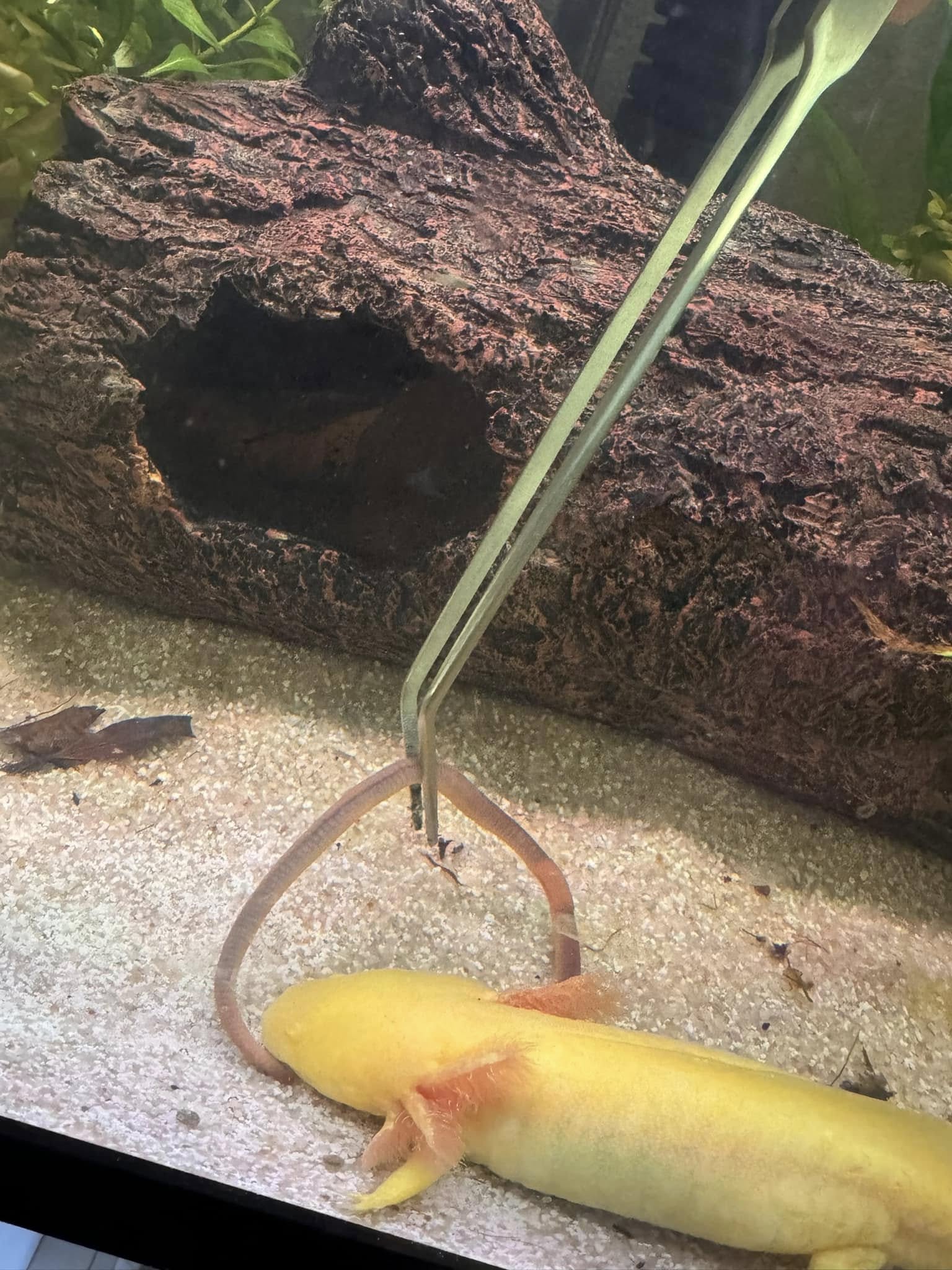
Worms are one of the best staple foods for axolotls, especially earthworms, nightcrawlers, and blackworms. So when your axolotl suddenly refuses worms, it’s usually a sign that something in the environment, health, or feeding method is off.
In this guide, you’ll learn every common reason axolotls stop eating worms, how to fix it quickly, and when not eating is normal.
Is It Normal for Axolotls to Refuse Worms?
Yes — sometimes.
Axolotls may refuse food temporarily due to stress, recent changes, or temperature issues.
However, refusing worms for several days may indicate a deeper problem.
1. Water Temperature Too High or Low
Temperature has a HUGE effect on axolotl appetite.
Ideal range: 16–18°C (60–64°F)
Anything above 20°C (68°F) or below 14°C (57°F) can cause food refusal.
Fixes:
- Cool the tank using fans, frozen bottles, or a chiller
- Don’t let temp fluctuate more than 1–2°C per day
- Avoid room heaters near the tank
High heat is one of the top reasons for sudden appetite loss.
2. Worms Too Large for the Axolotl
Young axolotls especially struggle with big nightcrawlers.
Feeding rule:
Worm thickness should be no bigger than the axolotl’s head.
Fixes:
- Cut worms into smaller pieces
- Use smaller earthworms or blackworms
- Feed with long tongs to avoid dropping large pieces
Large worms can cause refusal, choking, or regurgitation.
3. Stress From Recent Changes
Axolotls stop eating whenever something changes in their environment.
Common stressors:
- New tank setup
- New tank mates (never recommended)
- Moving the tank
- New filter or lighting
- Large water changes
- Handling
Fix:
Give 24–72 hours of quiet time.
Keep lights dim and avoid tapping the glass.
4. Poor Water Quality (Ammonia, Nitrite, pH)
Bad water parameters kill appetite immediately.
Check levels:
- Ammonia: 0 ppm
- Nitrite: 0 ppm
- Nitrate: <20–40 ppm
- pH: 7.0–8.0
If ammonia or nitrite is above 0, your axolotl will refuse worms and may float, curl gills forward, or breathe rapidly.
Fix:
- Do a 20–40% water change
- Clean filter sponges in tank water (never tap water)
- Reduce feeding until parameters stabilize
Use a liquid test kit — strips are unreliable.
5. Worm Type Is Unappealing
Some axolotls are picky eaters.
Nightcrawlers have a strong taste and smell that some individuals dislike.
Try switching to:
- Canadian nightcrawlers
- Red wigglers (washed thoroughly to remove bitter fluid)
- Small earthworms
- Blackworms
- Bloodworms (short-term only)
Often the issue is simply flavor preference.
6. Worms Moving Too Much or Too Little
Axolotls rely heavily on movement to trigger their feeding response.
If worms move TOO much:
The axolotl may get startled → refuses food.
If worms don’t move at all:
They don’t trigger hunting instincts.
Fix:
- Try wiggling worms gently with feeding tongs
- Present them in front of the axolotl’s face
- Avoid dropping them randomly into the tank
7. Impacted or Constipated Axolotl
If your axolotl hasn’t pooped in a while, it won’t want to eat worms.
Signs of constipation:
- Floating
- Swollen belly
- Refusing food
- Lethargy
Fix:
- Cool the tank to 16°C (60°F)
- Offer soft foods (bloodworms)
- Increase water changes
- Avoid gravel that may cause impaction
Never force-feed.
8. Parasites or Illness
If appetite stays low for more than a week, parasites could be the cause — especially if the axolotl came from a pet shop.
Signs:
- Weight loss
- White poop
- Lethargy
- Excessive gill shrinking
- Frequent gulping
Fix:
- Contact an exotic vet
- Bring a fresh stool sample
- Avoid random medications
Worm refusal alone isn’t proof of parasites, but it’s a common symptom.
9. Axolotl Is Full or Eating at Night
Axolotls sometimes eat at night when you’re not watching.
New owners often think their axolotl refuses worms, but it may be eating them later.
Try:
- Feeding right before lights-out
- Leaving a small worm near the hide
- Checking for “vanishing worms” in the morning
10. Maturity or Seasonal Behavior
Adult axolotls naturally slow their eating in:
- Summer heat
- Winter cool-down periods
- Breeding season (for females especially)
This is normal unless it lasts more than 7–10 days.
How Long Can Axolotls Go Without Eating?
- Adults: 1–2 weeks safely
- Juveniles: 3–5 days only
- Babies: Must eat daily
Never let young axolotls go long without food.
When to Worry
Call a vet if your axolotl:
- Refuses worms for more than 10–14 days
- Has curled-forward gills
- Shows rapid breathing
- Has ammonia burns
- Floats constantly
- Has noticeable weight loss
These indicate a medical or environmental emergency.
FAQ
Why won’t my axolotl eat nightcrawlers?
They may be too big, too bitter, or too active. Try smaller worms or cut pieces.
Do axolotls get bored of worms?
Yes. Alternate with pellets, bloodworms, and blackworms for variety.
Are red wigglers safe for axolotls?
Yes — but rinse thoroughly to remove their bitter secretion.
My axolotl eats pellets but not worms — why?
Pellets smell strong and are easier to swallow, especially for young or stressed axolotls.
How do I get my axolotl to eat worms again?
Fix temperature, check water parameters, offer smaller worms, and reduce stress in the tank.
Conclusion
If your axolotl isn’t eating worms, don’t panic — it’s a common issue with clear environmental or health-related causes.
Start by checking water quality, temperature, stress levels, and worm size/type.
Most axolotls return to eating within a few days once the root cause is fixed.